*This post contains affiliate links, which means I receive a small commission, at no extra cost to you, if you make a purchase using the links.
How to Introduce Multiplication to Kids in a Fun Way
The short story of Why I would Expose my Three-Year Old Son to Multiplication
In order to introduce multiplication to kids, you have to make it fun!My son was playing with numbers in our math set and saw the times tables sign(x). He held up the x and wanted to know what it meant. I challenged myself to explain it in a manner he could understand and I succeeded!!A Great Children’s Book to Introduce Multiplication to Kids
About three weeks later, I went to the library and saw in the children’s section the title, 3 x 4 a Toon Book by Ivan Brunetti. I thought this comic book would be an excellent tool to further explain how multiplication works to my son.
*Bonus Tip
Go to the bottom of this post to Access 2 Hands-On Art Activities that will Explain Multiplication
The author provides colorful pictures, diverse characters, and a great storyline to introduce multiplication.
A Brief Summary
It is about a teacher who gives his students a homework assignment of drawing 12 things but in sets. A few students raise their hands and ask the teacher about various options to completing their homework. For example, one student asks, “Can I draw 3 sets of 4?”, the teacher replies, “It’s up to you!”
The story goes on to show the reader the process that each student executes to complete their homework assignment. One student likes baseball, so he draws three of each item: baseball, gloves, bats, and hats.
There is one student that needs more time to process her homework assignment. Her mom, dad, and even little brother are there to help her undertake this project. She comes up with a great idea at the end; however, you will have to read the book in order to find out what it is!
Tips for Parents and Teachers
At the end of the book, you will find tips for parents and teachers on How to Read Comics with Kids. The author explains how kids are naturally drawn to the detailed pictures in comics, which makes them want to read the words!
Read this book and provide your child with an entertaining explanation to the importance of multiplication!
What are other ways to teach multiplication tables to children?
One common way is to have children study their times tables a certain amount of time each day. This is how I learned. However, there are creative ways through play that children can learn as well.
We created a role play where his toy elephant’s mission was to destroy the city.
Every time elephant knocked down and destroyed a number, my son had to build the number up.
This role play provided familiarity with multiples of three.
Plus, my son was the city’s hero because he kept building the numbers up.
He did not realize he was learning while doing this activity.
Multiples of 3 Lego City! Pictured here is 3, 6, 9, 12, and 15.
Songs– Many people know the words to a lot of songs not because someone taught them but through hearing it repeatedly. Use this same concept with learning multiplication.
*This post contains affiliate links, which means I receive a small commission, at no extra cost to you, if you make a purchase using the links.
Some may ask “Why would you explain multiplication to a preschooler?” I will tell you why. One day my son was playing with a math set that included numbers and symbols such as the plus, minus, equal and division signs. He likes to put the numbers in ascending and descending order. While playing, he held up the X (the multiplication sign) and asked “What is this?”
When my son asks a question, I usually challenge myself to answer it so he can understand. This time, after hearing the question, I was lost for words. I started to tell him that it’s a multiplication sign and he will learn about it once he gets older. Before uttering these words, I thought a picture would be the best way to explain this concept.
*Bonus Tip
Go to the Bottom of this Post to Get Access to A Fun Game, Using Action Figures and Stuffed Animals, That Will Explain Multiplication to Young Kids
Here was my process for answering the question, “What is multiplication?”
I cut a big piece of craft paper and taped it to the wall. Then we found crayons and started our quick lesson.
Please note: In order to use this explanation, ensure your child is familiar with their numbers, counting, and shapes.
With the crayon, I wrote the problem 2×3 =. Then I asked my son to duplicate the problem using the numbers and symbols in his math set. He took the 2, 3, x, and equal sign and made the problem on the floor.
Afterwards, I told him the first number(2), tells us to draw two circles on the paper. The second number (3), tell us how many dots to put in each circle.
Then I instructed him to do the following…
Draw two big circles on the paper.
Put three dots in each circle.
Count all the dots.
You have your answer!
Eventually he learned that multiplication is adding a number to itself a certain amount of times. So, 2×3 is the same thing as 3 +3 = 6.
We kept going over various examples, until he was able to create a problem and complete it independently. I also explained that it works inversely. You can draw three circles and put two dots in each to solve the problem. This shows that 2+2+2 = 6.
He was excited to learn something new and I was proud in my ability to explain this concept to my preschooler!
My son solving the problem 8×2 =
*This post contains affiliate links, which means I receive a small commission, at no extra cost to you, if you make a purchase using the links.
How to Teach Alphabet Recognition in a Fun Way
Some parents have concerns about teaching their child alphabet recognition. The big question is, “Where do I start with teaching my child the alphabet?” I’ve heard some parents say, “My child will not sit long enough to learn it.” Others are laid back and depend on their child’s teacher to handle this task.
Then I’ve talked to teachers who are able to teach their whole class alphabet recognition with no problem. Other teachers find it difficult to teach when they have many children in their class on different levels. These are the teachers who find it helpful if parents work with their child at home in addition to school.
I understand, as a mother, this can be an overwhelming task because it is one of the first concepts children will learn. As a result of hearing from parents and teachers, I decided to teach my child the alphabet in a fun and relaxing manner.
Watch the video below and see my son at 21 months blend sounds to spell a word independently…
Many parents have the following questions about learning the alphabet…
When should a child recognize letters of the alphabet?
It is important to look at your local school district’s kindergarten program of studies. Our school district teaches kindergarteners to identify and name the upper-and-lower case letters of the alphabet. If you have a child that needs more time with alphabet recognition, then they may fall behind in class if you don’t work with them at home. I think it is safe for them to know it before starting kindergarten.
My son learned the alphabet at 18 months through play. I didn’t expect him to learn them until the age of three or four. When you teach it through fun learning methods, the child will want to learn more and more about the alphabet.
Should you teach letter names or sounds first?
Many people have different philosophies about whether to teach letter names or sounds first. I did it simultaneously. When my son was an infant, I would sing the Alphabet song to him with the sounds included. We played with soft alphabet blocks and I would identify the letter and the sounds associated with them. I also played songs, with a catchy beat, in the car with letter identification and phonics.
What are the steps to teach phonics?
Using play, songs, and books is a great way to teach phonics. Anytime my son and I read an alphabet book or played with an alphabet toy, we identified the letters and sounds (long and short sounds). Various books, songs, and toys that interest him were chosen to expose my son to the alphabet. I never wanted him to get bored with learning the alphabet using only one method. When a child is exposed to the alphabet and their sounds in various fun ways and methods, the learning becomes inevitable.
Once my son knew all the phonics, I showed him how to use them to sound out words like cat or pot. I also read books to him and played with puzzles and word games that included those same words for diverse repetition. Then I got him magnetic letters and asked him if he could spell words like bag or nut. When I said the words, I would slowly enunciate each letter sound so he could successfully spell it.
How do you teach the alphabet?
Before exposing my child to the alphabet, I did research on how to teach children through wholesome and playful learning. I applied my findings during playtime with my child and found that this teaching method works! Worksheets or flashcards were not used to initially teach my son alphabet recognition. They were incorporated after he knew them.
I used fun learning methods to teach the alphabet. This includes singing, dancing, painting, and using toys such as play doh to form the letters of the alphabet. There are so many ways to make it fun. I want to share with you what I have learned and experienced through a FREE Mini Course on How To Teach Alphabet Recognition in a Fun Way!
You may have a child that knows the alphabet, phonics, and is able to read. This FREE course is also for you. The principles taught in the course can be applied to almost ANY NEW CONCEPT you want your child to learn.
This method was used to teach my son…
Basic Social and Hygiene Skills
Life Skills
Colors
Shapes
Write
Read
Tell Time
The Planets and their functions
Alphabet and Numbers in Spanish
Addition and Subtraction
I could go on but you get the picture.
This course provides the following…
Over 100 Tips, Activities, and Resources
Tips for the Child who loses Interest in Learning the Alphabet
How to Tailor lessons to your child’s pace
How to change your mind set about learning and teaching
The three basic learning styles in children
How to determine your child’s learning style
How to expose children to new concepts aligned with their learning style
How children with certain learning styles tend to communicate
The toys/activities children with certain learning styles tend to favor
How to make learning fun and playful for children
How to determine the best time to teach your child
How to execute Fun In-Depth Learning
How to use the 5 senses to teach your child
How to combine In-depth learning and learning styles during play
How to incorporate digital media in your child’s learning
How to teach a child with more than one learning style
How to Structure your Day
How to progress to teaching your child the phonics
How to track your child’s progress
Daily thought-provoking assignments to hold you accountable
HOW DOES THIS MINI-COURSE WORK?
Just sign up for the FREE mini-course with the form at the bottom of this post. You will receive DAILY emails for 16 days with useful information, tips, tools, and an assignment.
You will receive your first email shortly after joining! Remember, it’s free!
YOU CAN DO THIS! I am here to help and guide you. The daily emails serve as positive reminders to encourage you to take small action steps.
I look forward to sharing my knowledge with you. Please share your progress with me as well!
By the way, if you need more help CLICK HERE to find out about our Workbook!
*This post contains affiliate links, which means I receive a small commission, at no extra cost to you, if you make a purchase using the links.
Reading aloud to my son is a sacred time within our household. I usually read before nap and bed time. It seems to create a serene atmosphere before rest. Then there are times when reading makes us animated! These types of stories may include characters experiencing adventures where they are running, jumping or kicking and on their way to solve a big problem!
My goal is to read so my son feels like he is in the story. I have learned that there is an art to reading aloud. Below is what I have found…
*Bonus Tip
Go to the bottom of this post to get access to the 10 Types of Books to Choose When Reading Aloud to Kids
Below is a video of 5 Reading Games/Activities for Kids!
Pick Books that Interest Them (or you think would interest them)
I try to pick books that my son can relate to or find interesting. I gravitate toward books with characters that look like him. Also books about cars, racing, sports, nature, animals, numbers, alphabet, and space spark his curiosity. Interacting and observing him assists me in finding books he will connect to. One day, he asked me how water comes into our home. This led me to getting a book about how the home works. Try to get books that answer your child’s questions to further their understanding of a topic.
Better yet, Let Them Choose their Own Books
It is so much easier for my son to pick books out for himself. I usually take him to the library or the local book store and let him skim the book titles until he finds what he wants. Sometimes, he goes in the library knowing what he wants and is on a mission to find it. We find the books by inputting keywords in the computerized catalogue. When we sit down to read, the first book he usually chooses is the one he just found!
Voice Changes for Different Characters
Changing your voice for different characters is very entertaining for children. It can also be fun for the parent! If I am reading a male character, I will lower my tone. If I am reading a character that is a monster, then my voice gets raspy. Be creative and have fun practicing various character voices!
Emphasize Emotions and Actions
We read lots books with animal characters and I usually make their sounds or physical gestures that represent them. Also, if there is a quiet section in the book, then I lower my voice to set the mood. When there is an onomatopoeia like the word “Pop” and “Boom,” I get very loud and will hit my hand on the floor to make the sound.
Ask Kids about their Predictions
During reading time, I ask my son what he thinks will happen. This gets him engaged in the story. He also wants to know if his prediction is correct.
Listen to Audio Books
While riding in the car, my son and I will listen to audio books. The narrators are highly skilled in their changing voices and emphasizing emotions and actions. Listen to these books and you will learn a lot!
Many parents want to raise children who are leaders. A child does not necessarily have to be Class President or Captain of a Sports team to be a leader. Sometimes leadership can be demonstrated in the child who chooses not to engage in gossip. In my opinion, children who are their authentic selves despite what others think are leaders.
I figure one way for a child to be a leader is through practice. It is also helpful when a parent creates a leadership environment within the home.
Check out the 5 Ways to Create a Leadership Environment for Kids at the bottom of this post!
At first, the age of five sounded like a good time to introduce the concept. However, most toddlers, start to show leadership skills around two when they know what they want to play with and explore. My decision was to meet my child where he was and start letting him lead me at the age of two. Of course, this was practiced in safe and controlled environments.
As soon as I take my son outside to play, he is the leader. He chooses whether he wants to walk or ride his scooter or bike. Once we get outside, he can choose to go left toward the blacktop where we play ball, blow bubbles, and draw with sidewalk chalk. In the right direction, there is a playground, nature trail, and grassy area for play. Wherever he goes I will follow him. He often looks back to ensure that I am behind him and then chuckles to himself.
Another time my son leads is when we play “Marching Band”. My friends gave him a Paw Patrol- Music Set which includes a tambourine, drum, Chinese drum, Clapper, and Castanets. We play the musical instruments to various songs while marching and dancing around the house. Along with choosing the type of music we listen to, my little one is the marching band leader. He may lead me dancing in the basement, kitchen, or living room.
Your children can learn a lot when you let them lead sometimes. Below is what I found…
Confidence and Trust
Letting a child lead gives them confidence because they are experiencing your trust. You are trusting in their ability to lead the way, make decisions, and communicate. As a parent, you give them credibility and are showing respect. They feel you are buying in to them and their choice of activity. They also feel that they are worthy to be leading you, an adult.
Use of Knowledge
In most cases, in order to led someone, you must have prior knowledge of the subject. In order to lead you on a walk around the neighborhood, a child must be familiar with their surroundings. Once knowledge is established, they can apply it to provide a better experience. For example, if a child is leading you toward a concrete play area, they may bring side walk chalk or a ball to make playtime fun.
Asking questions
In contrast, some kids may choose to lead even if they don’t have prior knowledge. Leaders who are not knowledgeable about a subject may surround themselves with experts in that field. Part of leadership is knowing when these opportunities arise. Children are excellent at detecting this! You are your child’s expert. You may build Legoswith your child and they are leading you in building something that is familiar to them. What happens when they are building something for the first time? They either figure it out or they may ask for your help.
When to Lead
It is important to establish where your children can lead. For example, you probably don’t want your children leading in the grocery store or in an office building. Being a good follower makes a good leader. Your child follows you in the grocery store so one day they will independently go themselves or lead someone else while shopping. Being a follower is where the child will gain prior knowledge to guide or mentor others. Knowing when to lead helps the child with boundaries and to apply a new skill to help someone in the future.
As a parent, be a good follower occasionally. In doing so, your child may discover their interests, purpose, and passions!
Don’t forget to Sign Up for our FREE Course of How to Teach the Alphabet in a Fun Way!Have fun following!OUR KID FRIENDLY FAST & FUN STUDY TRICKS FOR BETTER GRADES: 9 FUN STRATEGIES FOR SUCCESS IN LEARNING AND SCHOOL HAS $29 OFF THE ORIGINAL PRICE.Our books are available on Amazon, “Teach Your Toddler to Read Through Play,” “Fun Easy Ways to Teach Your Toddler to Write, and “Teach Your Child About Money Through Play.”
THE TEACH YOUR TODDLER TO READ THROUGH PLAY ONLINE COURSE HAS A $97 DISCOUNT.Click here for the PAYMENT PLAN OPTION!
5 Ways to Create a Leadership Environment for Kids
Get the password for the library with 5 Ways to Create a Leadership Environment for Kids here by completing this form. Once you press the GET ACCESS NOW button, we will send you an email with the password. Then go to SOY Resource Library and enter the password.
Last Saturday, my family and I were scheduled to take a day trip to a farm but the forecast called for rain. I decided an alternative trip would be a nature walk near our home. My son was so excited because he could wear his rain boots and splash in puddles! He experienced this and so much more!
While we were walking, I thought about the benefits of being in nature. Here is what I found…
Hands-on Science Lesson
One day, we watched the cartoon, Sid the Science Kid, and learned about the four life cycle stages of a frog. The first stage is the tiny frog eggs laid by a female frog. Then the eggs turn into tadpoles. The tadpoles start to develop front and back legs which is the froglet stage. The last stage is the adult frog, which is when the tail leaves and he is ready to live on land.
During our nature walks, we experienced two stages of this life cycle. We saw masses of tadpoles swimming in a pond. My husband was able to catch tadpoles with a net and we observed them. My son was brave enough to touch the tadpoles and comment on their slimy skin.
About two weeks later, the tadpoles turned into hopping little frogs. We caught about 8 frogs to examine them for a brief moment before we let them go. It was an amazing sight.
Physical Activity
On our way to the nature trail, we saw squirrels and birds. As soon as my son saw them, he chased the animals and burned off tons of energy. Once we saw puddles, I switched his shoes from sneakers to rain boots and he jumped in the middle of them. His hands sloshed in the water as he examined the colors and depth. On the trail we detected rocks embedded in the ground and we dug them out. My son threw the rocks in the water and watched the circular ripples form. The walk itself was a great physical exercise for the body.Social
We saw other families with children walking their dogs and runners. We greeted each other and sometimes had mini conversations. My son ran behind some of the runners and wanted us to join him. There were two older boys, riding their bikes, who saw us looking down and wanted to know what we were searching for. We told them we were catching frogs and saw turtles in the pond. They joined us by catching little frogs which allowed us more observational opportunities.Use of tools
Whenever we go on a nature walk, I take scientific tools to provide a better experience. My son or I will carrykid size binoculars around our necks to observe squirrels and birds in trees. We also use it to watch turtles on branches in the pond. I keep a magnifying glass in my bag to closely view bugs, frogs, rocks, plants, flowers, pinecones, and leaves. As mentioned before, my husband will catch bugs and frogs in a net and put them in a jar for my son to examine. The most important tool, in my opinion, are hands. My son used his hands to touch and feel the treasures he found in nature. He was able to communicate whether the item was smooth, bumpy, slimy, rough, etc.
Cost
Taking a walk outside your home and being exposed to nature is free. Most parks with nature trails are complimentary also. Take advantage of the natural lessons that God has provided. You can’t beat a day full of adventure at no cost!
I knew our trip was successful when my son said “That was a fun day!”
Happy Exploring!OUR KID FRIENDLY FAST & FUN STUDY TRICKS FOR BETTER GRADES: 9 FUN STRATEGIES FOR SUCCESS IN LEARNING AND SCHOOL HAS $29 OFF THE ORIGINAL PRICE.Our books are available on Amazon, “Teach Your Toddler to Read Through Play,” “Fun Easy Ways to Teach Your Toddler to Write, and “Teach Your Child About Money Through Play.”
THE TEACH YOUR TODDLER TO READ THROUGH PLAY ONLINE COURSE HAS A $97 DISCOUNT.Click here for the PAYMENT PLAN OPTION!
*This post contains affiliate links, which means I receive a small commission, at no extra cost to you, if you make a purchase using the links.
We live in a very diverse area near people from various countries. I love talking to our neighbors about their culture, food, language, and upbringing. My son loves to eat and always wants to know how food will benefit him. For example, he knows that chicken and eggs will help him build muscle. When I saw the book, What’s On Your Plate? Exploring the World of Food by Whitney Stewart, I thought he would be interested in reading it.
This book highlights countries such as Mexico, Ethiopia, China, and Greece, and gives the reader information on their locations, foods frequently eaten, and recipes. The enticing food pictures in this book will make you hungry.
My son connected with this book instantly. First, he learned that he eats similar foods to people all over the world. Moroccans eat grapes and oranges which are two of his favorite foods. He eats rice, tomatoes, and parmesan cheese like the Italians.
As we were reading the book, we had the globe beside us. We stopped on each page, identified the country, its food, and located it on the globe. I saw my son perk up because he saw these countries were located far away in various continents, yet one similarity was food.
Read this book with your child and learn about food all over the world!
Other ways to make connections with this book…
Make the recipes in the book
Eat Ethnic foods – Go to an Indian, Ethiopian, or Mexican Restaurant
Talk to people from other countries and compare what you have learned in this book.
When I was in high school, I took a Geography class. I did not like this class at all. At the time, I didn’t understand why I had to learn about other countries. I remember studying for this class was difficult because the subject did not interest me.
It wasn’t until I went to college that I wanted to learn about the world outside of the United States. It was a time that enabled me to interact and live with people from all over the world. My first time on an airplane was during my college years. I went to Dominican Republic for a Community Service Project. After this trip, I traveled to Costa Rica, England, and Ireland for service and study abroad opportunities. It was these experiences that made me want to go back in time and study Geography again. Through my travel, I developed relationships with people across the world.
So how do you spark a child’s interest in Geography?YOU MAKE A CONNECTION! Specifically, make a connection that coincides with the child’s interest.
Below are fun ways to create connections between your children/students and the world! You will need a map or globe for the activities below…
For the child who loves animals
My son loves animals. We learn about how and where various animals live around the world. We’ve been able to learn about the continents through his love of animals. Make it fun and search for where the 10 fastest animals in the world live!
For the child who loves sports
You and your child can explore Unusual Sports played around the world. For example, toe wrestling is played in Britain. In this game, competitors intertwine their toes and try to pin their opponents’ foot down. Find out which continent has the most unusual sports!
For the child who wants to be a Princess
You and the child can meet Princesses from around the world. Search for Princesses in Belgium, Germany, England, Monaco, and Liechtenstein. Have your child choose their favorite princess!
For the child who has friends from other countries or cultures
Locate on a globe or map where your child’s friends and their families were born. Find out about their culture, food, land features, and language. Try cooking the country’s food with your family.
Next week’s post will be about how my son and I learned another fun lesson in Geography.
Stay Tuned!OUR KID FRIENDLY FAST & FUN STUDY TRICKS FOR BETTER GRADES: 9 FUN STRATEGIES FOR SUCCESS IN LEARNING AND SCHOOL HAS $29 OFF THE ORIGINAL PRICE.Our books are available on Amazon, “Teach Your Toddler to Read Through Play,” “Fun Easy Ways to Teach Your Toddler to Write, and “Teach Your Child About Money Through Play.”
THE TEACH YOUR TODDLER TO READ THROUGH PLAY ONLINE COURSE HAS A $97 DISCOUNT.Click here for the PAYMENT PLAN OPTION!Get the password for the library with Tips and Tools for Accelerated and Fun Learning for kids by completing this form. Once you press the SUBSCRIBE button, we will send you an email with the password. Then go to SOY Resource Library and enter the password.
Indoor air pollution can cause sneezing, scratchy throats, headaches, and watery eyes. One solution to this problem is plants, which decreases indoor air pollution within a room. Certain plants make the air healthier to breathe.
I was watching the cartoon, Cyberchase- Indoor Air Pollution Episode, with my son and learned these facts. This cartoon episode features Norm, the Gnome, explaining how new paint and furniture can cause air pollution. View Norm’s explanation in this video.
We also learned more plants are needed for a larger room. Larger rooms carry more air pollution; therefore, more plants are needed to purify the air. How do you determine the number of plants needed for a room? The cartoon characters counted tiles in a room to answer this question. Watch this video to see how it’s done. (select How Many Plants Per Room?)
How could you determine the number of plants needed if you don’t have tiles in a room? The answer is estimation.Watch how the characters estimate a room size, using previous knowledge. (select Estimating Room Size).
You can apply this within your classroom or at home.
How we applied this lesson in our home…
While I was three months pregnant, I had lunch with a former co-worker, Cyndi. Cyndi just viewed a PBS special where Dr. Ben Carson discussed Brain Health. In this video (at 8:50), Dr. Carson says a baby’s brain continues to develop once he/she is born. The more a baby learns, the more the brain’s dendrites are making connections.
Babies who experience interaction with caregivers through song, cuddling, playing, and talking, develop connections in the brain faster and better. By the time a child is three years old, their brain has reached 90% of its growth.
I thought PLAY would be the best way to interact with my son and boost his brain development. I never imagined this concept would lead to him reading at 21 months!
Please note: I did the activities below with my son as a full-time working mom.
I used in-depth learning to teach my son. In-Depth learning is being exposed to a concept in various ways. I concentrated on teaching my son through three of the five senses which were sight, touch, and hearing. Dr. Ben Carson addresses In-Depth learning in his book Think Big.
*Bonus Tip
Access my list of Fun and Creative Tools Used to Encourage My Son to Read at the bottom of this post!
Below are examples of what my son and I did….
SING
I sung constantly to my son. It became something that soothed him. I sung when he woke up in the middle of the night, in the car, and while feeding and changing him. Songs taught my son language. They also helped him to learn the alphabet and phonics. I took it a step further and created songs about words that began with each letter of the alphabet.
Read
I love going to the library with my son because of the programs, toys, puzzles and books. Before leaving the library, I always checked out at least 15 children books. I ensured at least one of the books was about the alphabet. There are zillions of books at the library about the ABC’s. He was able to see the same words I sung in songs within these books.
PLAY, PLAY, PLAY
I enjoyed coming home from work to play with my child. It seemed like a break from sitting and looking at a computer all day. We played with toys such as play doh and alphabet blocks. Before he could talk, we molded the playdoh into letters. We drew pictures on the storm door with window markers in alphabetical order. For example, we drew an apple for A and banana for B. On our way to the playground in the evenings and weekends, we identified letters on car license plates and signs.
Talk
Talking is a great way to increase a child’s focus. We discussed stories we read in books. We also made up stories about the alphabet and various animals. Whenever we were in the grocery store, I identified foods and the letter they started with. It is important to converse with your child on various topics!
Technology
Once my son could identify letters, I let him watch cartoons that featured the alphabet, phonics, and words. Leapfrog has a great series of educational cartoons. We also listened to toddler radio and hip-hop educational CDs in the car.
Put it Together
Once he knew the phonics, I taught him how to blend letter sounds to read words. Many words, including sight words, were becoming familiar to him through exposure to books, children museums, YouTube, the library, cartoons, and anywhere we went. He heard words through our conversations, songs, radio, and television. His brain started making connections and then he started reading. He has also developed a true love of reading.
Similar concepts were also used to teach him to


 Eventually he learned that multiplication is adding a number to itself a certain amount of times. So, 2×3 is the same thing as 3 +3 = 6.
We kept going over various examples, until he was able to create a problem and complete it independently. I also explained that it works inversely. You can draw three circles and put two dots in each to solve the problem. This shows that 2+2+2 = 6.
He was excited to learn something new and I was proud in my ability to explain this concept to my preschooler!
Eventually he learned that multiplication is adding a number to itself a certain amount of times. So, 2×3 is the same thing as 3 +3 = 6.
We kept going over various examples, until he was able to create a problem and complete it independently. I also explained that it works inversely. You can draw three circles and put two dots in each to solve the problem. This shows that 2+2+2 = 6.
He was excited to learn something new and I was proud in my ability to explain this concept to my preschooler!


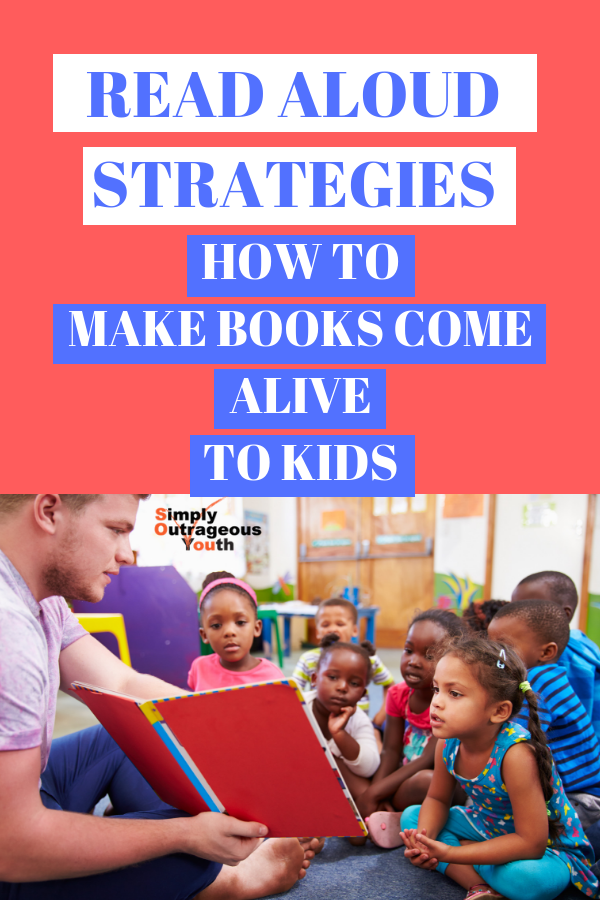 Reading aloud to my son is a sacred time within our household. I usually read before nap and bed time. It seems to create a serene atmosphere before rest. Then there are times when reading makes us animated! These types of stories may include characters experiencing adventures where they are running, jumping or kicking and on their way to solve a big problem!
My goal is to read so my son feels like he is in the story. I have learned that there is an art to reading aloud. Below is what I have found…
Reading aloud to my son is a sacred time within our household. I usually read before nap and bed time. It seems to create a serene atmosphere before rest. Then there are times when reading makes us animated! These types of stories may include characters experiencing adventures where they are running, jumping or kicking and on their way to solve a big problem!
My goal is to read so my son feels like he is in the story. I have learned that there is an art to reading aloud. Below is what I have found…
 Many parents want to raise children who are leaders. A child does not necessarily have to be Class President or Captain of a Sports team to be a leader. Sometimes leadership can be demonstrated in the child who chooses not to engage in gossip. In my opinion, children who are their authentic selves despite what others think are leaders.
I figure one way for a child to be a leader is through practice. It is also helpful when a parent creates a leadership environment within the home.
Many parents want to raise children who are leaders. A child does not necessarily have to be Class President or Captain of a Sports team to be a leader. Sometimes leadership can be demonstrated in the child who chooses not to engage in gossip. In my opinion, children who are their authentic selves despite what others think are leaders.
I figure one way for a child to be a leader is through practice. It is also helpful when a parent creates a leadership environment within the home.
 Last Saturday, my family and I were scheduled to take a day trip to a farm but the forecast called for rain. I decided an alternative trip would be a nature walk near our home. My son was so excited because he could wear his rain boots and splash in puddles! He experienced this and so much more!
While we were walking, I thought about the benefits of being in nature. Here is what I found…
Hands-on Science Lesson
One day, we watched the cartoon, Sid the Science Kid, and learned about the four life cycle stages of a frog. The first stage is the tiny frog eggs laid by a female frog. Then the eggs turn into tadpoles. The tadpoles start to develop front and back legs which is the froglet stage. The last stage is the adult frog, which is when the tail leaves and he is ready to live on land.
During our nature walks, we experienced two stages of this life cycle. We saw masses of tadpoles swimming in a pond. My husband was able to catch tadpoles with a net and we observed them. My son was brave enough to touch the tadpoles and comment on their slimy skin.
About two weeks later, the tadpoles turned into hopping little frogs. We caught about 8 frogs to examine them for a brief moment before we let them go. It was an amazing sight.
Physical Activity
On our way to the nature trail, we saw squirrels and birds. As soon as my son saw them, he chased the animals and burned off tons of energy. Once we saw puddles, I switched his shoes from sneakers to rain boots and he jumped in the middle of them. His hands sloshed in the water as he examined the colors and depth. On the trail we detected rocks embedded in the ground and we dug them out. My son threw the rocks in the water and watched the circular ripples form. The walk itself was a great physical exercise for the body.
Social
We saw other families with children walking their dogs and runners. We greeted each other and sometimes had mini conversations. My son ran behind some of the runners and wanted us to join him. There were two older boys, riding their bikes, who saw us looking down and wanted to know what we were searching for. We told them we were catching frogs and saw turtles in the pond. They joined us by catching little frogs which allowed us more observational opportunities.
Use of tools
Whenever we go on a nature walk, I take scientific tools to provide a better experience. My son or I will carry
Last Saturday, my family and I were scheduled to take a day trip to a farm but the forecast called for rain. I decided an alternative trip would be a nature walk near our home. My son was so excited because he could wear his rain boots and splash in puddles! He experienced this and so much more!
While we were walking, I thought about the benefits of being in nature. Here is what I found…
Hands-on Science Lesson
One day, we watched the cartoon, Sid the Science Kid, and learned about the four life cycle stages of a frog. The first stage is the tiny frog eggs laid by a female frog. Then the eggs turn into tadpoles. The tadpoles start to develop front and back legs which is the froglet stage. The last stage is the adult frog, which is when the tail leaves and he is ready to live on land.
During our nature walks, we experienced two stages of this life cycle. We saw masses of tadpoles swimming in a pond. My husband was able to catch tadpoles with a net and we observed them. My son was brave enough to touch the tadpoles and comment on their slimy skin.
About two weeks later, the tadpoles turned into hopping little frogs. We caught about 8 frogs to examine them for a brief moment before we let them go. It was an amazing sight.
Physical Activity
On our way to the nature trail, we saw squirrels and birds. As soon as my son saw them, he chased the animals and burned off tons of energy. Once we saw puddles, I switched his shoes from sneakers to rain boots and he jumped in the middle of them. His hands sloshed in the water as he examined the colors and depth. On the trail we detected rocks embedded in the ground and we dug them out. My son threw the rocks in the water and watched the circular ripples form. The walk itself was a great physical exercise for the body.
Social
We saw other families with children walking their dogs and runners. We greeted each other and sometimes had mini conversations. My son ran behind some of the runners and wanted us to join him. There were two older boys, riding their bikes, who saw us looking down and wanted to know what we were searching for. We told them we were catching frogs and saw turtles in the pond. They joined us by catching little frogs which allowed us more observational opportunities.
Use of tools
Whenever we go on a nature walk, I take scientific tools to provide a better experience. My son or I will carry  We live in a very diverse area near people from various countries. I love talking to our neighbors about their culture, food, language, and upbringing. My son loves to eat and always wants to know how food will benefit him. For example, he knows that chicken and eggs will help him build muscle. When I saw the book,
  When I was in high school, I took a Geography class. I did not like this class at all. At the time, I didn’t understand why I had to learn about other countries. I remember studying for this class was difficult because the subject did not interest me.
It wasn’t until I went to college that I wanted to learn about the world outside of the United States. It was a time that enabled me to interact and live with people from all over the world. My first time on an airplane was during my college years. I went to Dominican Republic for a Community Service Project. After this trip, I traveled to Costa Rica, England, and Ireland for service and study abroad opportunities. It was these experiences that made me want to go back in time and study Geography again. Through my travel, I developed relationships with people across the world.
So how do you spark a child’s interest in Geography?
YOU MAKE A CONNECTION! Specifically, make a connection that coincides with the child’s interest.
Below are fun ways to create connections between your children/students and the world! You will need a
When I was in high school, I took a Geography class. I did not like this class at all. At the time, I didn’t understand why I had to learn about other countries. I remember studying for this class was difficult because the subject did not interest me.
It wasn’t until I went to college that I wanted to learn about the world outside of the United States. It was a time that enabled me to interact and live with people from all over the world. My first time on an airplane was during my college years. I went to Dominican Republic for a Community Service Project. After this trip, I traveled to Costa Rica, England, and Ireland for service and study abroad opportunities. It was these experiences that made me want to go back in time and study Geography again. Through my travel, I developed relationships with people across the world.
So how do you spark a child’s interest in Geography?
YOU MAKE A CONNECTION! Specifically, make a connection that coincides with the child’s interest.
Below are fun ways to create connections between your children/students and the world! You will need a  Indoor air pollution can cause sneezing, scratchy throats, headaches, and watery eyes. One solution to this problem is plants, which decreases indoor air pollution within a room. Certain plants make the air healthier to breathe.
I was watching the cartoon, Cyberchase- Indoor Air Pollution Episode, with my son and learned these facts. This cartoon episode features Norm, the Gnome, explaining how new paint and furniture can cause air pollution.
Indoor air pollution can cause sneezing, scratchy throats, headaches, and watery eyes. One solution to this problem is plants, which decreases indoor air pollution within a room. Certain plants make the air healthier to breathe.
I was watching the cartoon, Cyberchase- Indoor Air Pollution Episode, with my son and learned these facts. This cartoon episode features Norm, the Gnome, explaining how new paint and furniture can cause air pollution.  While I was three months pregnant, I had lunch with a former co-worker, Cyndi. Cyndi just viewed a PBS special where Dr. Ben Carson discussed Brain Health.
